

Table of Contents
Understanding Anxiety Dsm 5 Criteria and Why It Matters Today
You drag yourself into work each morning already drained. Your chest feels tight before your first meeting. Maybe you have chalked it all up to burnout.
Yet sometimes what looks like exhaustion is something deeper, and the anxiety DSM 5 criteria can help you tell the difference. For a deeper dive, see our guide on burnout at work.
The DSM 5 is the diagnostic manual clinicians use to classify mental health conditions. Its anxiety criteria describe specific patterns of worry, physical tension, and avoidance. These patterns persist over time and interfere with daily functioning.
Knowing them gives you language for what you feel.
Burnout and clinical anxiety can look nearly identical at work. The key difference often lies in duration, intensity, and how much your symptoms spill into life outside the office.
Why These Criteria Matter at Work
Workplaces reward pushing through discomfort. As a result, many people mask anxiety for months or years. They call it stress, ambition, or just being busy. Meanwhile, the underlying condition quietly worsens.
- Excessive worry that feels hard to control
- Physical signs such as muscle tension or a racing heart
- Avoidance of meetings, calls, or feedback
- Sleep disruption that persists even on quiet days
- Irritability that shows up in everyday interactions
Notice how these overlap with burnout symptoms. That overlap is exactly why so many people miss the real picture. A clinician can sort through the details with you.
Self-awareness is simply the first step.
You do not need a diagnosis to take your experience seriously. Still, accurate information helps you ask better questions. It also helps you advocate for the right kind of help when you are ready.
What Research Tells Us: The Evidence Behind This
If you have ever wondered whether your exhaustion is burnout or something deeper, the research backs up that instinct. Studies indicate that workplace burnout and clinical anxiety overlap heavily in how they present. Yet they are distinct conditions with different treatment paths.
Understanding what the evidence shows can help you take your own symptoms more seriously.
One consistent finding stands out. Burnout is typically tied to your work environment, while clinical anxiety persists across contexts. Research suggests that anxiety symptoms often continue on weekends, holidays, and even after a job change.
Burnout, by contrast, tends to ease when workload and workplace stressors lift. That distinction matters because it shapes what kind of help actually works.
Where the Symptoms Overlap
Clinicians often note that the surface signs look nearly identical. You might notice poor concentration, irritability, sleep disruption, and a sense of dread before the workday. These shared features explain why so many people assume they are simply burned out.
However, the anxiety DSM 5 criteria help separate the two by looking at duration, triggers, and how far the symptoms reach into your life outside work.
- Persistent worry that does not switch off after hours
- Physical tension, restlessness, or a racing heart
- Sleep problems that continue through rest days
- Avoidance of tasks, people, or situations beyond work
- Symptoms lasting six months or longer
Each item on that list points toward something broader than workload alone. When several apply to you, the evidence suggests it is worth exploring further with a professional. Self-awareness is not overreacting.
It is the first step toward getting the right support.
Why the Distinction Changes Your Next Step
The research carries a practical message. Treating burnout with rest alone may not resolve clinical anxiety, and treating anxiety without addressing workplace stress leaves half the picture untouched. Studies indicate that combined approaches work best.
That means looking at both your environment and your internal patterns, rather than choosing one explanation over the other.
Key takeaway: The evidence supports taking overlap seriously. If your symptoms follow you home and stay, that pattern is worth discussing with a clinician.
You do not need a diagnosis to start paying attention. Noticing patterns is enough to begin. The such techniques simply give you a clearer framework for that noticing, so you can describe what you are experiencing with more confidence.

Practical Strategies You Can Start Using Right Now
You have probably read enough theory by now. The real question is what to do on a Tuesday morning when your chest tightens before a status meeting. Start small, because small actions repeated daily reshape how your nervous system responds to work stress.
None of these strategies require a diagnosis or a big budget.
Map Your Symptoms Before You Judge Them
For one week, jot down when worry spikes and what happened just before. Note the time, the trigger, and how long the feeling lasted. This simple log gives you real data instead of vague impressions.
It also mirrors how clinicians apply the anxiety DSM 5 criteria in practice, tracking duration and context rather than a single bad day.
- Record the trigger, such as a meeting, email, or deadline
- Note how long the worry lasted in minutes or hours
- Rate intensity from one to ten
- Mark whether the feeling stayed at work or followed you home
After seven days, patterns usually emerge. Perhaps your anxiety clusters around performance reviews, or maybe it never fully fades on weekends. That distinction matters, since persistent worry across settings is one signal worth discussing with a professional.
Build Micro-Breaks Into Your Day
Research suggests that brief, frequent recovery moments reduce cumulative strain better than one long break. Try a two-minute reset between meetings: slow breathing, a short walk, or simply looking away from the screen. These pauses interrupt the stress cycle before it compounds.
Over time, they teach your body that activation has an off switch.
Pick one anchor point, such as the moment you close your laptop for lunch, and attach a 60-second reset to it. Consistency beats intensity.
Separate Work Signals From Anxiety Signals
Burnout eases when workload drops, yet clinical anxiety often persists regardless of circumstances. Test this for yourself by noticing whether your symptoms follow you into restful periods. If the worry continues on a quiet Sunday, that is useful information. It suggests your experience may extend beyond workplace exhaustion, which is exactly where this framework helps clarify the picture./p>
Talk to Someone Who Can Assess You
A brief conversation with a clinician or employee assistance provider can save months of guesswork.
Bring your symptom log, since concrete details make assessment faster. Ask directly whether your pattern meets criteria for a clinical anxiety disorder. You deserve a clear answer rather than a vague reassurance.
Meanwhile, protect the basics: sleep, movement, and at least one connection outside work. These foundations support everything else. They are not a cure, but they keep your baseline steadier while you figure out the next step.
Finding the Right Approach for You
You have gathered your notes, tracked your patterns, and maybe spoken with someone qualified. Now comes a quieter question: which path actually fits your life? There is no single correct route here.
Your energy, your schedule, and the severity of what you are feeling all shape the answer. So let us walk through the realistic options side by side.
One useful frame is to match the intensity of support to the intensity of your symptoms. Mild, intermittent worry often responds well to structured self-guided work. Persistent anxiety that disrupts sleep or focus usually calls for professional involvement.
Meanwhile, the anxiety dsm 5 criteria give you and a clinician a shared language for that decision. They describe clusters of symptoms, not a score you pass or fail.
| Approach | How It Works | Effectiveness | Best For |
|---|---|---|---|
| Guided self-help | Structured workbooks and app-based programs teach coping skills in short daily sessions | Moderate for mild symptoms; research suggests good results when used consistently | Early or occasional worry that has not disrupted daily functioning |
| Therapy (CBT or ACT) | A trained clinician helps you test anxious thoughts and change avoidance patterns week by week | Strong; studies indicate lasting benefit for clinical anxiety | Persistent worry, avoidance, or symptoms that interfere with work |
| Medication review | A physician or psychiatrist assesses whether medication could steady your baseline | Moderate to strong for many people, often best combined with therapy | Severe symptoms, sleep disruption, or little response to other approaches |
| Workplace adjustments | You and your manager reshape workload, deadlines, or meeting load to reduce triggers | Moderate; helps most when paired with clinical support | Anxiety clearly tied to specific job demands or environment |
Notice that these options are not rivals. In practice, most people combine two or three. For example, therapy plus a workload conversation often works better than either alone.
Similarly, medication can steady you enough to engage fully in therapy. The point is to build a stack that fits, not to pick a winner.
Questions That Sharpen Your Choice
Before you commit, ask yourself a few honest questions. How often do symptoms show up in a week? Do they fade on rest days, or follow you everywhere?
Have you already tried self-guided tools for a fair stretch of time? Your answers point toward the right level of support.
- Rate how often symptoms appear: daily, weekly, or only around specific triggers.
- Check whether rest and time off actually reduce your symptoms.
- Note whether self-help tools have had a fair trial of several weeks.
- Decide how much time and energy you can realistically give each week.
- Ask whether your symptoms affect sleep, appetite, or focus at work.
If you are unsure, start lighter and escalate if needed. That is not a failure; it is good sequencing. Many clinicians suggest beginning with the least intensive option that could work.
Then you review progress after a set period, often four to six weeks. If nothing shifts, you step up to the next level with clearer information in hand.
A practical rule: if anxiety is costing you sleep, focus, or relationships most days, treat it as a signal to involve a professional rather than push harder alone.
Finally, give yourself permission to adjust. What works in March may not fit in September. Your needs will shift as work demands and recovery change.
So check in with yourself monthly, and keep the door open to a different combination. Flexibility, not perfection, is what keeps support working over the long run.
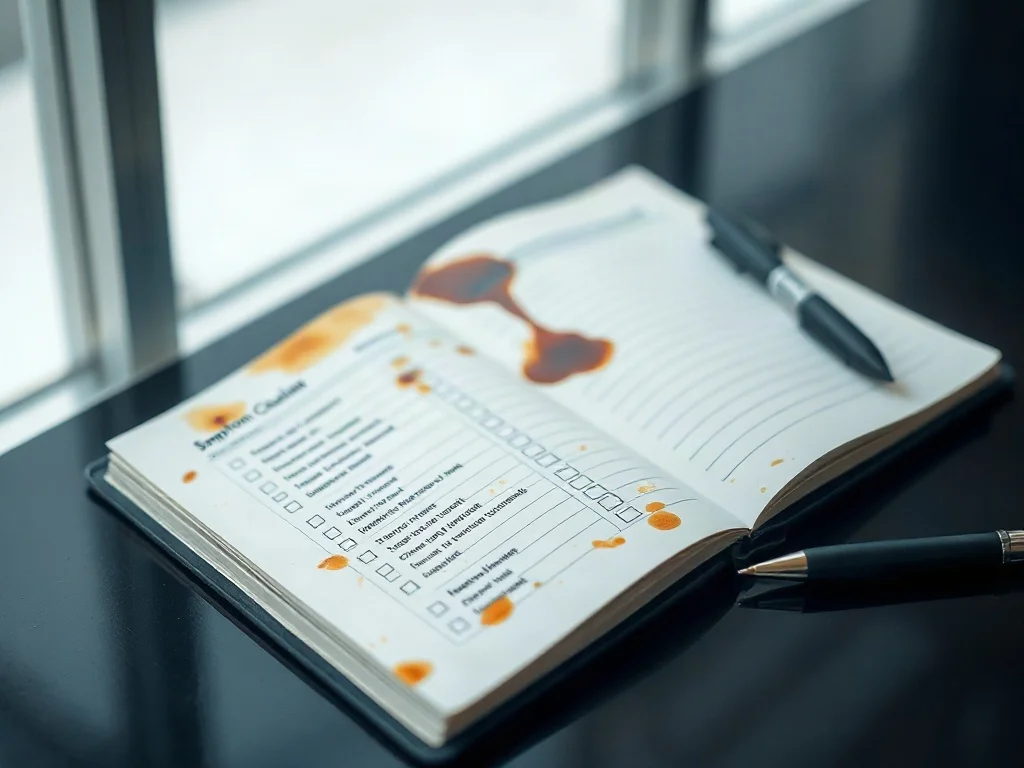
Building Long-Term Resilience: Daily Habits That Stick
You have probably tried a big overhaul before. Maybe a new routine started on a Monday and faded by Friday. That pattern is not a personal failing.
Research on habit formation suggests that small, repeatable actions outlast dramatic ones, so this section focuses on what you can actually keep.
Resilience is not a personality trait you either have or lack. It is a set of daily practices that buffer stress over time. When work exhaustion builds, these habits give your nervous system a reliable place to recover.
Start With One Anchor Habit
Pick a single action you can do at the same time each day. Anchor it to something that already happens, like your first coffee or your commute home. Consistency matters more than duration at the start.
- A two-minute breathing pause before opening your inbox
- A short walk after lunch, even around the building
- A fixed lights-out time on weeknights
- One screen-free meal each day
- A five-minute brain dump of worries before bed
Choose one item from that list, not five. Once it feels automatic, add another. This gradual stacking is how habits become durable rather than fragile.
Protect Recovery Like a Meeting
Recovery does not happen by accident in a busy week. It needs a slot on your calendar. Treat a lunch break or a walk as seriously as a client call, because your capacity depends on it.
Clinicians often recommend scheduling micro-breaks between tasks rather than waiting for a free hour. Short, frequent pauses lower cumulative strain better than one long break you never take.
If you notice persistent worry, sleep disruption, or dread that lasts for weeks, that pattern deserves a closer look. Knowing the anxiety DSM 5 criteria can help you describe your experience clearly when you speak with a professional.
Build a Buffer Against Setbacks
Bad weeks will happen. The goal is to make them survivable, not to prevent them. A simple plan for hard days keeps a rough patch from turning into a collapse.
Notice that none of these demand extra hours. They redistribute attention you already have. Over months, that redistribution compounds.
Know When Habits Are Not Enough
Self-care habits support wellbeing, yet they cannot fix a role that is chronically unsustainable. If your workload stays unmanageable, habits become a thin layer over a deeper problem. In that case, review the approach outlined with a clinician and consider what needs to change structurally./p>
Resilience includes the wisdom to ask for help.
Sometimes the strongest habit is the conversation you keep postponing.
FAQ
You have likely read through the earlier sections and still have practical questions. That is normal, because clinical anxiety and burnout overlap in ways that are genuinely confusing. Below are the questions readers ask most often, answered plainly and without jargon.
How do I know if my exhaustion is burnout or clinical anxiety?
The clearest signal is timing and scope. Burnout tends to track your workload: it eases when you take real time off and worsens when demands pile up. Clinical anxiety, by contrast, follows you into rest. You may lie awake on a quiet Sunday replaying a meeting, or feel dread before a day with nothing scheduled.
If worry persists across contexts and outlasts a holiday, that pattern points toward an anxiety condition rather than exhaustion alone. A clinician can help you separate the two, and the anxiety dsm 5 criteria give them a structured way to do it.
Can burnout and an anxiety disorder exist at the same time?
Yes, and this overlap is common in workplace settings. Chronic job strain can trigger or worsen anxiety symptoms, while pre-existing anxiety can make workplace stress harder to recover from. Because the two feed each other, treating only one often stalls progress.
Clinicians typically assess both, then build a plan that addresses the job environment and the internal symptoms together. Research suggests that combined approaches outperform single-target interventions for people in this situation.
What are the core this strategy a clinician looks for?
The diagnostic manual centers on excessive worry and tension that you find hard to control. That worry must persist for at least six months and show up across more than one area of life, such as work, health, and relationships. Clinicians also check for accompanying symptoms like restlessness, fatigue, trouble concentrating, irritability, muscle tension, and sleep disruption.
Crucially, those symptoms must cause real distress or impairment, and they cannot be better explained by a substance, a medical condition, or another disorder. Meeting the anxiety dsm 5 criteria is a clinical judgment, not a self-test, so a professional evaluation matters.
Should I tell my manager or HR about what I am experiencing?
There is no single right answer, and your safety and stability come first. Disclosing can open the door to accommodations, adjusted deadlines, or flexible hours. It can also feel risky in workplaces with poor psychological safety. Before you decide, consider what you actually need and whether your manager has a track record of handling sensitive information well.
You might start with a practical request, such as a temporary workload adjustment, rather than a full diagnosis. If you are unsure, an occupational health advisor or your clinician can help you weigh the options.
How long does it usually take to feel better?
Recovery timelines vary widely, and anyone who promises a fixed number is guessing. Many people notice early shifts within a few weeks of starting therapy, medication, or structured workplace changes. Deeper recovery from long-standing exhaustion often takes several months, because sleep, confidence, and stress tolerance rebuild gradually.
Setbacks along the way are expected rather than a sign of failure. Track small improvements, such as sleeping through one extra night or handling a difficult email with less dread, and share that progress with your clinician so your plan can adjust.
Conclusion
Your worth isn’t measured by how much exhaustion you can endure before you break.
Medical Disclaimer: This article is for informational purposes only and does not constitute medical advice, diagnosis, or treatment. The information provided is not a substitute for professional medical advice. Always consult a qualified healthcare professional before making any decisions about your physical or mental health.

We write about work the way most people experience it — exhausting, complicated, and rarely what it said on the job posting. No corporate speak. No toxic positivity. Just honest conversation about the modern workplace.